Visit to Hemingway Collection Part 2

Continuation of post regarding my visit to the Kennedy Library, Hemingway Exhibit on Between the Wars
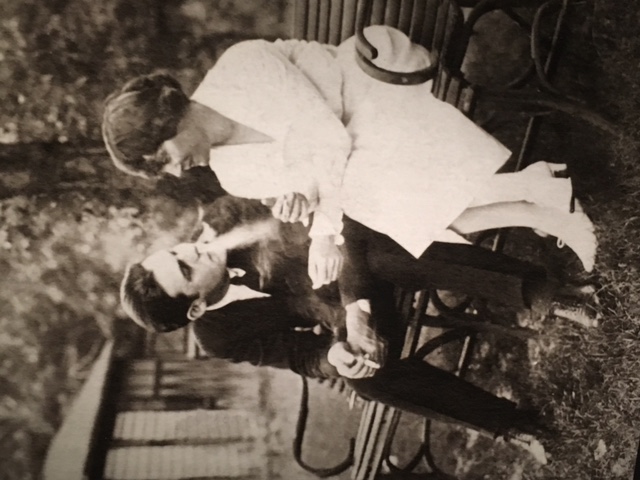
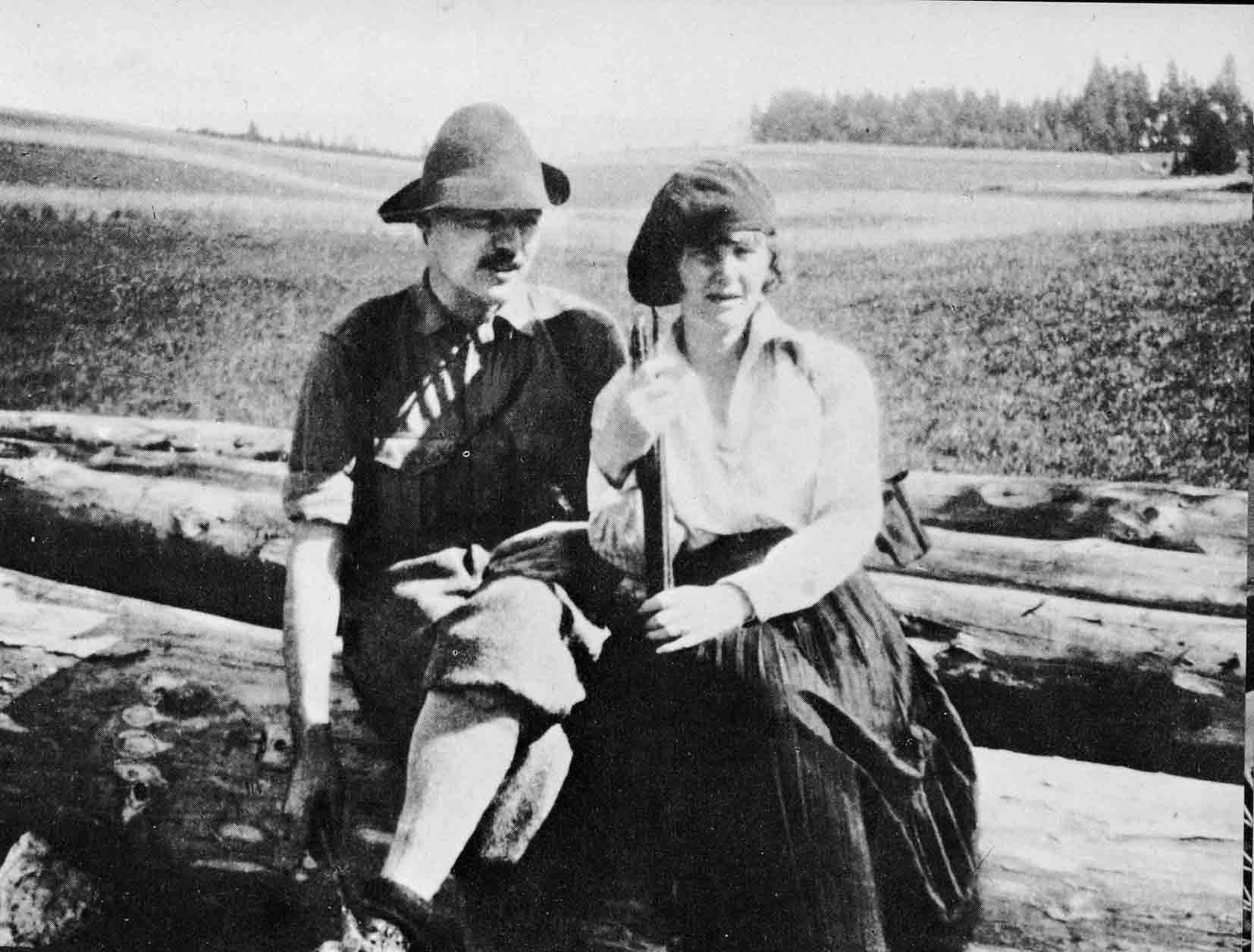
Hem and Hadley near their wedding

There was an anecdote displayed of an interview that Hemingway had with George Plimpton. Plimpton knew that Hemingway had written the end of A Farewell to Arms something like 39 times. Plimpton, a writer himself, asked if there was a technical problem that stumped him and why he kept re-writing the end. What was the problem? What was the hold-up???Image result for george plimpton

Hemingway, in typical succinct style, replied “getting the words right.”

Old joke but still makes me smile: A farewell to arms

Finally, a famous quote from A Farewell to Arms (1929) was posted. Most people know the first sentence, but not the next one. It reads, “The world breaks everyone and after many are strong in the broken places.” Most people stop there.
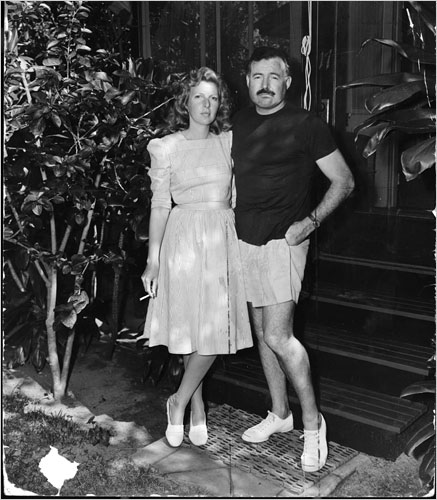
Hemingway and Martha: between their personal wars

It goes on, however, But those that will not break, it kills. It kills the very good and the very gentle and the very brave impartially. If you are none of these, you can be sure it will kill you too, but there will be no special hurry.

Thus we go from something that sounds somewhat upbeat and promising to a rather grim conclusion. Still, above all Hemingway believed that men can’t be defeated even in death.
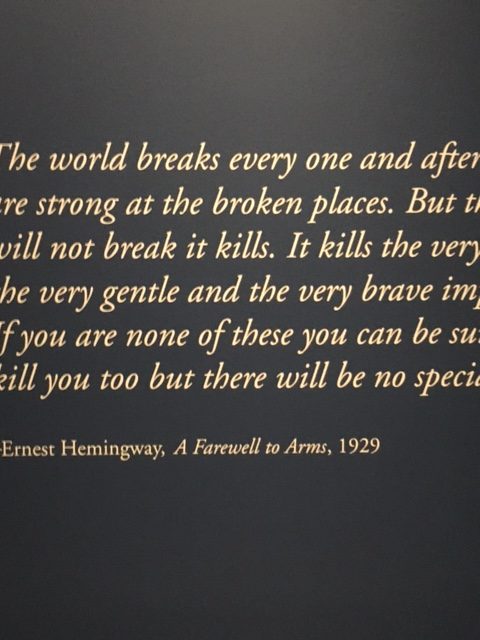
full quote of "the world breaks everyone"
full quote of “the world breaks everyone”

Finally, his mantra for writing was the following:

  1. Use short sentences.
  2. Use short first paragraphs.
  3. Use vigorous English.
  4. Avoid the use of adjectives.
  5. Eliminate every superfluous word.

And there you have it.img_0373
Love,

Christine

Visit To the Hemingway Collection in Boston Part 1

img_0373


Kennedy Library, home of the Hemingway Collection, Boston

I was in Boston for a few days and took the opportunity to visit the Hemingway collection at the JFK Library and Museum. It’s about 20 minutes depending on traffic from downtown in a cab but shuttle buses travel out there more inexpensively as well. It is right on the water and very modern as you can see.

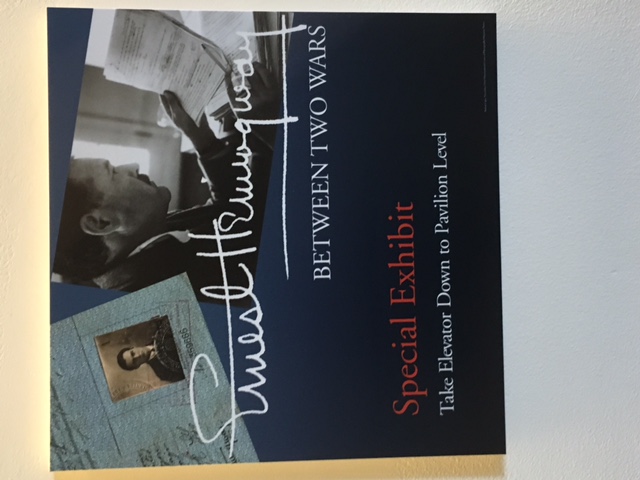
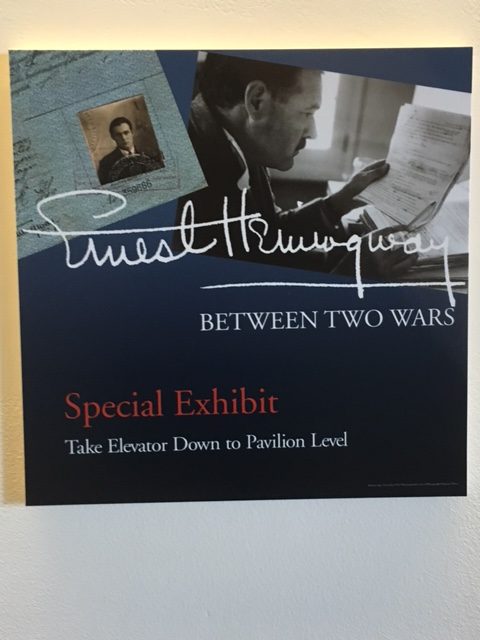
The present exhibit at the Hemingway Collection is entitled Hemingway Between the Wars, which covers much if not most of his career. The Old Man and the Sea, The Dangerous Summer, A Moveable Feast, among others came after World War II, (some posthumously. Hem died in 1961 and A Moveable Feast came out in 1964, edited primarily by Hemingway’s surviving wife, Mary. Garden of Eden  was also posthumously published.) but The Sun Also Rises, Men Without Women, A Farewell to Arms, The Snows of Kilimanjaro, For Whom the Bell Tolls, and many of the more famous short stories, i.e. The Short Happy Life of Francis Macomber, Green Hills of Africa, all were done between the wars.

Green hills of Africa

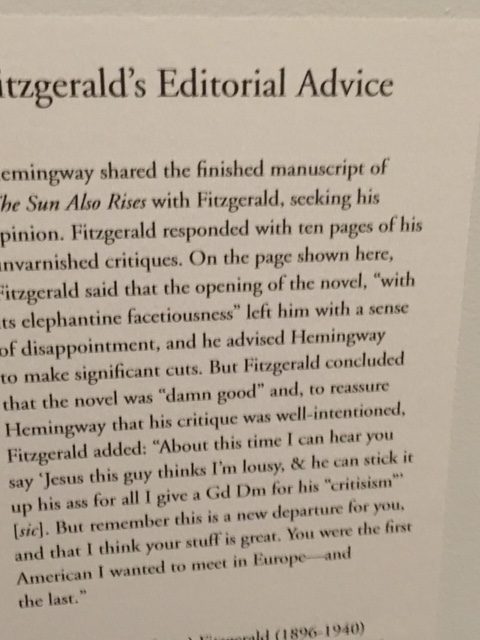
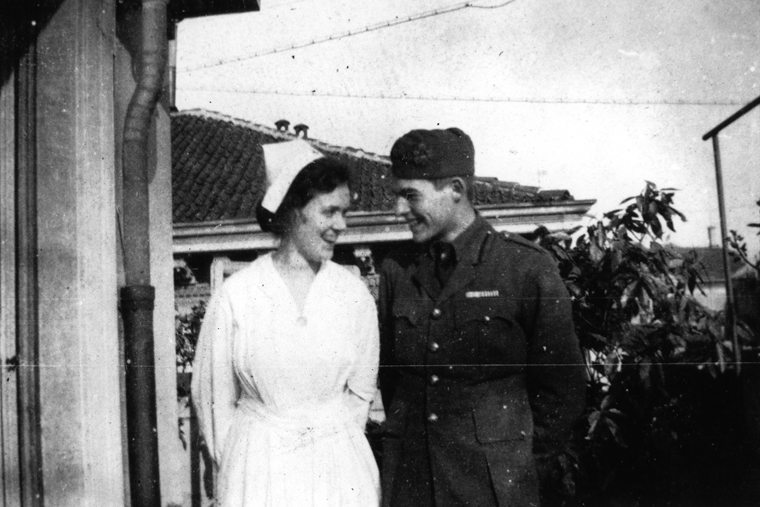
Although Hemingway had his first great romance (with Agnes Von Kurowsky, his attending nurse after Hemingway was injured) during the war–not between the wars, the famous photo of her and Hemingway was in the exhibit. While I knew well that F. Scott Fitzgerald had done some serious editing on The Sun Also Rises and cut out the beginning and told Hemingway to start at a different place—and the rest is history—they had the actual letter Fitzgerald wrote to Hemingway expressing his disappointment at the beginning and making his suggestion to cut in strong terms. Uncharacteristically and probably because he was young and not yet confident, Hemingway did not resist and took Fitzgerald’s advice, much to the improvement of the book.

 1918 Nurse Agnes von Kurowsky and American Red Cross volunteer Ernest Hemingway, Milan, Italy. Photograph in the Ernest Hemingway Photograph Collection, John F. Kennedy Presidential Library and Museum, Boston.
1918 Nurse Agnes von Kurowsky and American Red Cross volunteer Ernest Hemingway, Milan, Italy. Photograph in the Ernest Hemingway Photograph Collection, John F. Kennedy Presidential Library and Museum, Boston.
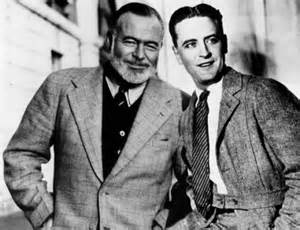
Hem and Scott
Hem and Scott


There also was a list of titles that Hemingway considered for The Short Happy Life of Francis Macomber (1936). For those of you not familiar with this story, it is set in Africa and was published in September 1936 in Cosmopolitan Magazine concurrently with The Snows of Kilimanjaro. The story was eventually adapted to the screen as “The Macomber Affair” (1947).

The story deals with a dysfunctional marriage between Francis and Margot who are on a big game safari in Africa with a professional hunter Robert Wilson. On his first time out, Francis had panicked when a wounded lion charged him, which humiliated him in front of his wife who took far too much pleasure in mocking him about his act of cowardice. It is suggested that she sleeps with Robert Wilson. The next day the party hunt buffalo. Two are killed and one is wounded and retreats. It’s generally bad form, not to mention cruel all around, to leave a wounded animal as it is, and Francis and Wilson proceed to track him so that they can put him out of his misery. When they find the buffalo, it charges Francis Macomber. He stands his ground and fires, but his shots are too high. At the last second Macomber kills the buffalo with his last bullet and Margot fires a shot from her gun, which hits Macomber in the skull and kills him. Good times!

Hadley
Hadley

(Sorry, as a divorce lawyer I sometimes have a dark sense of humor on relationships.) Anyway, at the exhibit, there is a list of some of the alternate titles that Hemingway considered such as Marriage is a Dangerous Game, A Marriage has Terminated, The Cult of Violence, Marriage as a Bond.

Happy

HAPPY On the Sea

Fitzgerald's advice typed up so we can read it easily. Actual handwritten letter was in the display.


TO BE CONTINUED Next POST!


One True Sentence

Today, as we all ponder the insanity of politics–whatever your leanings–and going low or high, the below article about Hemingway’s simplicity with words struck a chord. I’ve excerpted it and will include the full cite at the end. Yes, we need ONE TRUE SENTENCE.

Commentary: The writer’s quest for that one true sentenc

By Robert Garnett

Years pass, sometimes decades, in which nothing of lasting interest is published.

20161014_inq_op1garnett14-a

Ernest Hemingway in Paris just after “The Sun Also Rises” hit the best-seller list.

Ninety years ago, in October 1926, two classics appeared in a single week.

First came Winnie-the-Pooh.

Then came a radically original first novel by a young Midwesterner living in Paris. Among American novels of the past century, Ernest Hemingway’s The Sun Also Rises remains uniquely influential.

There is no better time to appreciate Hemingway’s clipped, terse language than during the rhetorical bloat of an American election year, with Niagaras of twaddle and cliché tumbling into an oceanic puddle of verbiage.

“Zounds!” a Shakespeare character laments, “I was never so bethumped with words.”

It was Hemingway’s insight that English had grown genteel, formulaic, and glib; that mechanically chosen words and phrases, sliding easily onto the page, falsified experience and faked emotion. Shunning sentimentality and drama, genuine passion wastes no words.

“The deepest feeling always shows itself in silence,” his contemporary Marianne Moore observed: “Not in silence but restraint.”

The Sun Also Rises, like most Hemingway novels, is set in Europe.

An American journalist working in Paris, Jake the narrator loves an English femme fatale, Brett.

“Can’t we just live together?” he pleads.

“Not with my own true love,” she replies. For Jake has been emasculated by a war wound, they cannot consummate their love, and the highly sexed Brett has no aptitude for platonic friendship.

“And there’s not a damn thing we could do,” Jake says.

Their dilemma defies happy resolution.

What language to express a world without hope or illusion?

For five years Hemingway rose early, walked to a chilly rented room over a Parisian sawmill, and worked to find the answer. Slowly he developed his voice, reminding himself when discouraged that “all you have to do is write one true sentence.”

Ah yes. One True Sentence. Easier said than done.

Best to all, Christine

HUNTER THOMPSON AND HEM’S STOLEN ANTLERS


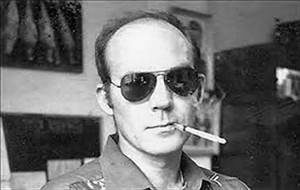
Hunter Stockton Thompson (18 July 193720 February 2005) was an American journalist and author famous for his flamboyant writing style, known as Gonzo Journalism, which blurred the distinctions between writer and subject, fiction and non-fiction. At the age of 67, suffering a bout of health problems, Thompson died at his home in Woody Creek, Colorado, of a self-inflicted gunshot wound to the head.

A good cigar
A good cigar
Hunter Thompson
Younger Hunter Thompson

Who knew?  More than 50 years ago Hunter Thompson was visiting Hemingway’s Ketchum, Idaho home and pilfered a set of trophy elk antlers.  In mid-August 2016, his widow, Anita Thompson, gave the antlers back stating that Hunter had always been embarrassed that he had taken them.

“He wished he hadn’t,” she said.  “He was young, it was 1964, and he got caught up in the moment.  He talked about it several times, about taking a road trip and returning them.”

The Ketchum, Idaho community library has been a repository for things that Hemingway used and that were from his Ketchum, Idaho residence.  The antlers were returned to the Idaho community library and ultimately shipped to Hemingway’s grandson in New York City.  For years, the antlers hung in the garage of Hunter Thompson’s home outside Aspen, Colorado.

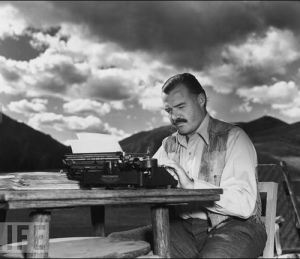
Hem writing a by-line from Idaho

The taking of the antlers has been local lore for a number of years and apparently now the antlers have found a final home within the Hemingway family.

Trivia to be sure, but kind of funny/sad too.


Love,

Christine