10 Surprising Facts About Ernest Hemingway

BY SCOTT BEGGSJULY 21, 2019(UPDATED: APRIL 2, 2021)
Central Press/Getty Images
CENTRAL PRESS/GETTY IMAGES

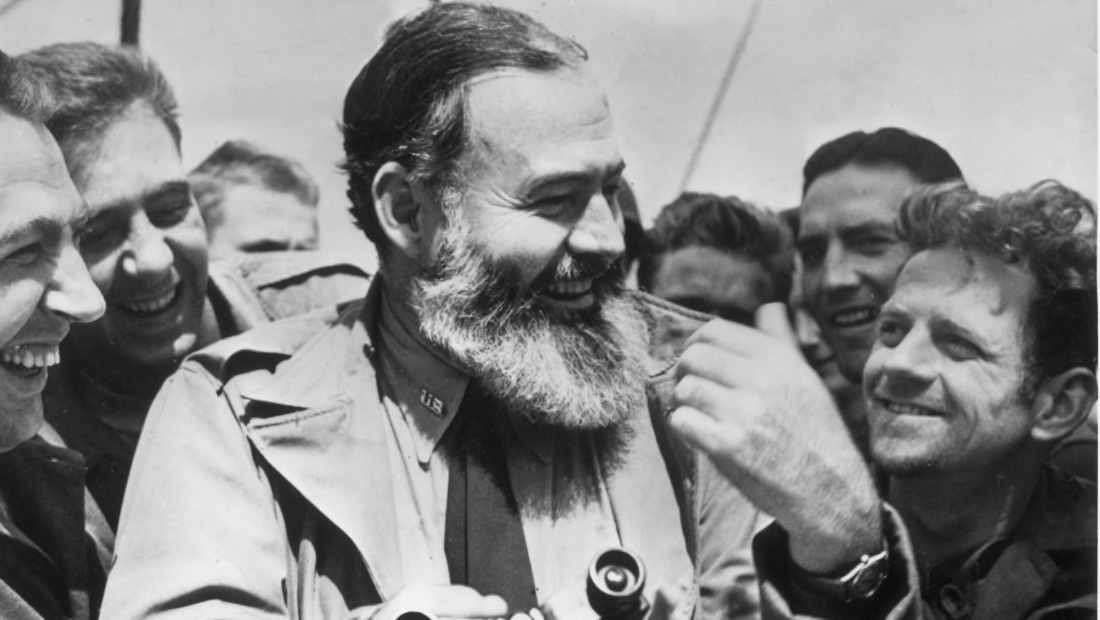
Ernest Hemingway was a titan of 20th-century literature, converting his lived experiences in multiple wars into rich, stirring tales like A Farewell to Arms and For Whom the Bell Tolls. The avid sportsman also called upon his love for the outdoors to craft bittersweet metaphorical works like Big Two-Hearted River and the Pulitzer Prize-winning The Old Man and the Sea. Here are 10 facts about the writer known as Papa, who was born on July 21, 1899.

1. ERNEST HEMINGWAY EARNED THE ITALIAN SILVER MEDAL OF VALOR AND A BRONZE STAR.

Hemingway served as an ambulance driver in Italy during World War I, and on July 8, 1918, he was badly wounded by mortar fire—yet he managed to help an Italian soldier reach safety. The action earned him an Italian Silver Medal of Valor. That honor was paralleled almost 30 years later when the U.S. awarded him a Bronze Star for courage displayed while covering the European theater in World War II as a journalist. His articles appeared in Collier’s and other magazines.
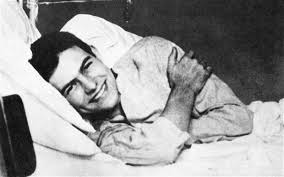
Nurse Agnes Von Kurowsky: Early love

2. ERNEST HEMINGWAY WAS ALSO ACCUSED—AND CLEARED—OF WAR CRIMES.

Following D-Day on June 6, 1944, when Hemingway, a civilian, was not allowed to disembark on Omaha Beach, he led a band of Resistance fighters in the French town of Rambouillet on a mission to gather intelligence. The problem was, war correspondents aren’t supposed to lead armed troops, according to the Geneva Convention. The Inspector General of the Third Army charged Hemingway with several serious offenses, including removing patches from his clothing that identified him as a journalist, stockpiling weapons in his hotel room, and commanding a faction of Resistance operatives. Eventually, he was cleared of wrongdoing.

Hemingway always maintained that he’d done nothing but act as an advisor. He wrote to The New York Times in 1951, stating he “had a certain amount of knowledge about guerilla warfare and irregular tactics as well as a grounding in more formal war, and I was willing and happy to work for or be of use to anybody who would give me anything to do within my capabilities.”
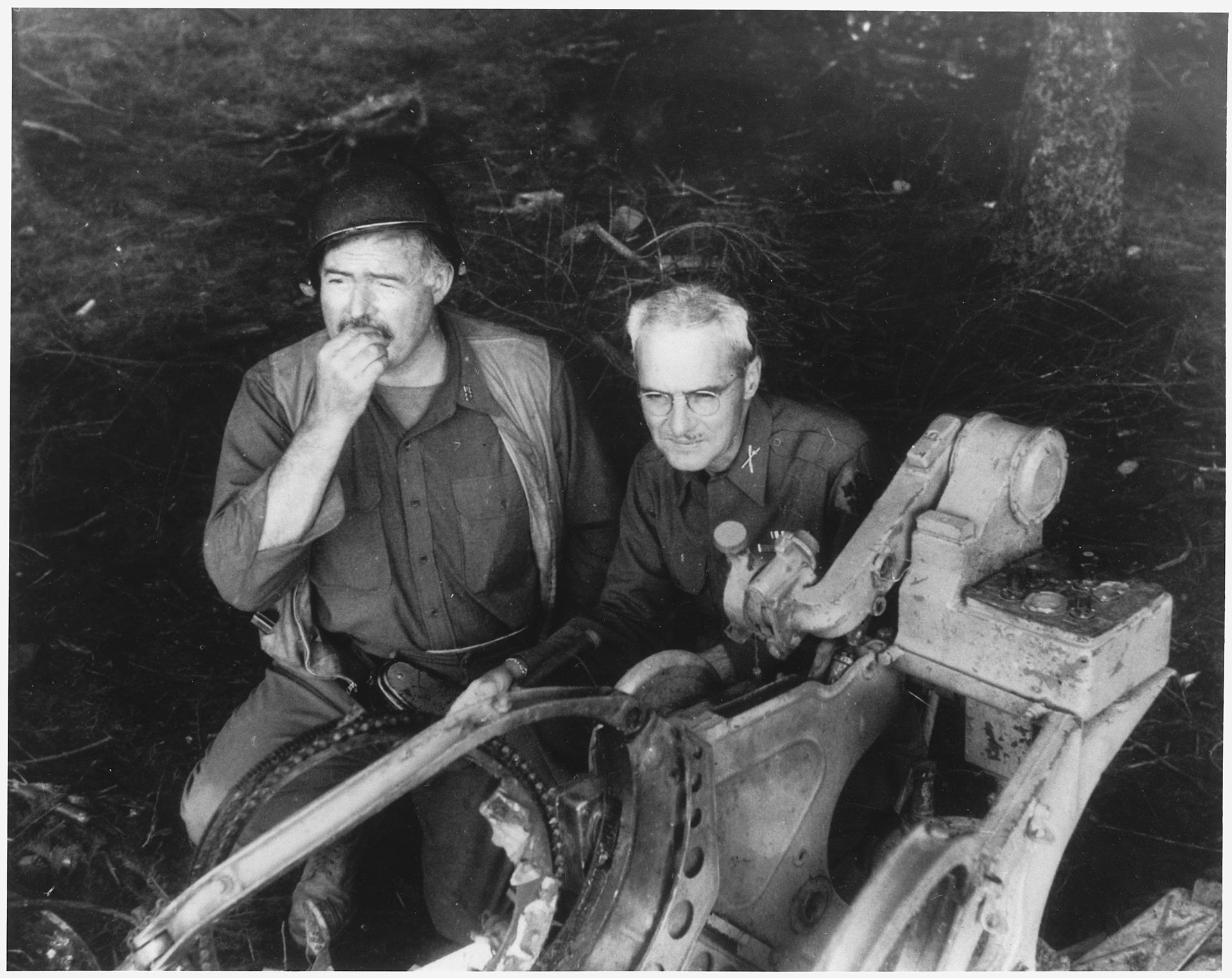
With Buck Lanahan

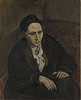
3. GERTRUDE STEIN WAS GODMOTHER TO ERNEST HEMINGWAY’S SON, JACK.

Renowned American modernist writer Gertude Stein moved to Paris in 1903 and hosted regular salons that were attended by luminaries and artists of the time. They included Pablo Picasso, Ezra Pound, F. Scott Fitzgerald, and a young Ernest Hemingway. Stein became godmother to Hemingway’s first son, Jack, in 1923.
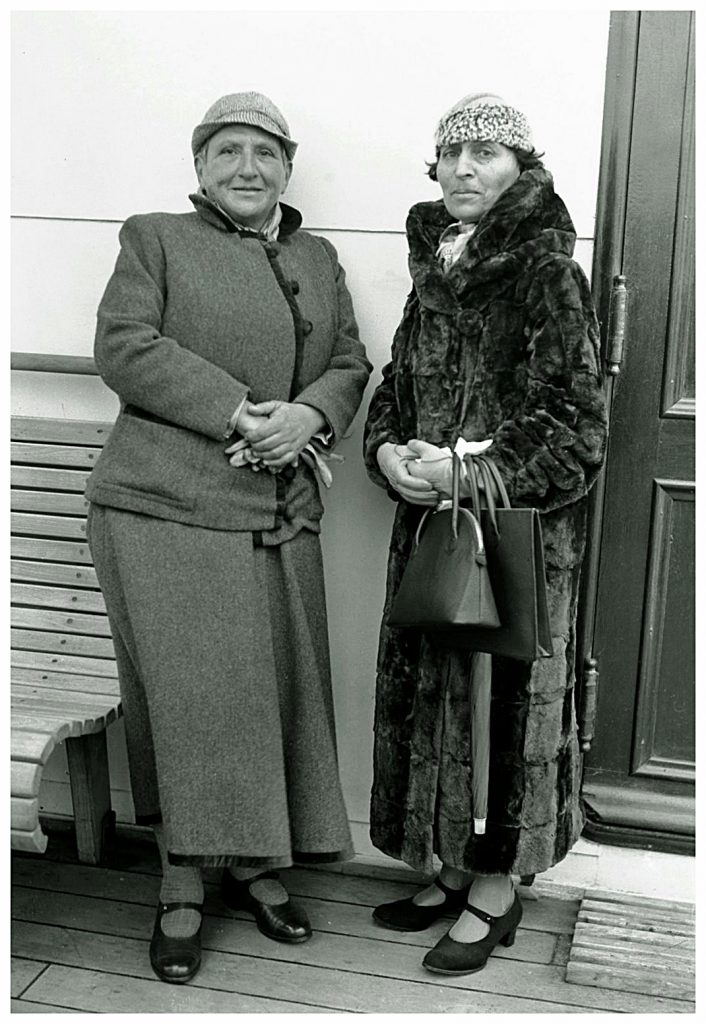
This image has an empty alt attribute; its file name is steintoklas1-706x1024.jpg

4. ERNEST HEMINGWAY WAS ALLEGEDLY A KGB SPY—BUT HE WASN’T VERY GOOD AT IT.

When Collier’s sent the legendary war correspondent Martha Gellhorn to China for a story in 1941, Hemingway, her husband, accompanied her and filed dispatches for PM. Documentation from the Soviet Union (revealed in a 2009 book) shows that Hemingway was possibly recruited as a willing, clandestine source just prior to the trip and was given the codename “Argo.” The documents also show that he didn’t deliver any useful political intel, wasn’t trained for espionage, and only stayed on their list of active sources until the end of the decade.

5. ERNEST HEMINGWAY CHECKED OUT F. SCOTT FITZGERALD’S PENIS IN A PARIS MEN’S ROOM.

Hemingway chronicled his life in Paris in his 1964 memoir A Moveable Feast, in which he claimed he had one memorable encounter with F. Scott Fitzgerald. The Great Gatsby author shared that his wife Zelda had mocked his manhood by claiming he wouldn’t be able to satisfy a lover. Hemingway offered to investigate the matter and render a verdict. He took Fitzgerald to the bathroom at Michaud’s, a popular restaurant in Paris, to examine the organ in question. Ultimately, Hemingway assured Fitzgerald that his physical endowment was of a totally normal size and suggested he check out some nude statues at the Louvre for confirmation.
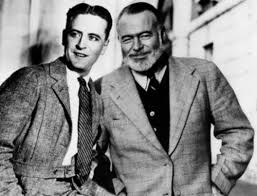
Fitz and Hem:

TO BE CONTINUED.

Hemingway and F. Scott Fitzgerald

This image has an empty alt attribute; its file name is images-91.jpeg

Hem and Scott

This image has an empty alt attribute; its file name is images.jpeg
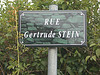
Rue Gertrude Stein, Paris

I just finished a book about the life of Zelda Sayre Fitzgerald called “Z.”  It was interesting.  Zelda’s hatred for Hemingway came across loud and clear.  I know that it’s historically true.  However, there’s a claim that Hemingway came on to her, which didn’t strike me as true based on all that I’ve read and Hem’s feelings toward/against her. And there’s another portion in which she wonders if her husband, F. Scott Fitzgerald, and Hemingway were closet homosexuals who had an attraction to each other.  I don’t know that much about F. Scott Fitzgerald, but there’s not anything in the volumes that I’ve read about Hemingway and his past that would even slightly suggest that. I’ve read all of the hypotheses that Hemingway went ultra-macho to compensate for homosexual feelings. I don’t see that but everyone can have an opinion. Those comments aside, I found that I had sympathy for Zelda’s plight and her frustration in her life with F. Scott Fitzgerald.

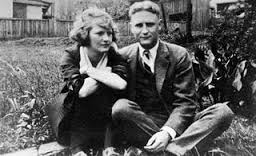
Zelda and Scott
Zelda and Scott

I also couldn’t help comparing Fitzgerald, of course, to Hemingway.  When Hemingway met Fitzgerald, Fitzgerald was the star, having come off of  a great success with The Beautiful and Damned. His short stories were successfully being sold and some were going to Hollywood.  F. Scott Fitzgerald was generous with his time and advice to Hemingway and they remained really close friends for a long time before something of quiet falling out occurred, probably due to normal as opposed to cut-throat literary rivalry and partly due to Hemingway’s disgust with F. Scott Fitzgerald’s drinking and Zelda.  Whatever else you can say about Hemingway and his later serious problems with the bottle, for much of his career, he was disciplined when it came to writing.  He often stopped drinking for some significant periods of time while writing and he didn’t drink during the day while he was getting his words down on paper.  Fitzgerald began to drink daily from morning on and for many years, didn’t even try to write. Once Hemingway began to abuse alcohol, it was not good. 

Hem and Fitzgerald shared the editor Max Perkins at Scribners. After their falling out, they used Max to find out about each other. There was attachment between them. Hemingway was so competitive that he had trouble being friends with writing rivals. he was both confidant and insecure. 

Heim in Midnight in Paris
Hem in Midnight in Paris

I also gathered from “Z” that the ragefulness between Zelda and Fitzgerald went on for years and they both treated each other badly.  It was a sort of recreational warfare.  That behavior certainly didn’t occur between Hemingway and Hadley.  I think there was some bitterness in his fighting with Pauline (second wife) in the end, but not the low blows Zelda and Scott hurled.  Hemingway generally felt guilty at the end of a relationship and didn’t rant and rave at his soon to be ex-wife.

The Sun Also Rises
The Sun Also Rises

His relationship with Martha (third wife) was an exception because it did become volatile.  Certainly there was anger and insults with Mary (fourth wife) and they might have divorced had Hem lived longer.  With the exception of Martha, Hem’s other three wives didn’t try to compete with him and perhaps that was what he was looking for in a woman. All gave up a great deal of independence to be with him. He tended to prefer stable, smart, but non-challenging women–and Martha was not any part of the latter. Further, he was married four times, whereas Fitzgerald and Zelda were only married once, although affairs did occur in the marriage.

Hemingway and Gellhorn

I liked the book and I felt for Zelda, which I didn’t expect.  It was interesting to read another perspective on the jazz age, and the whole lost generation crowd in Paris, including the Murphys, Gertrude Stein, John Dos Passos, Ford Madox Ford, Picasso.

You might try it.  It’s an easy read and Hemingway features prominently.

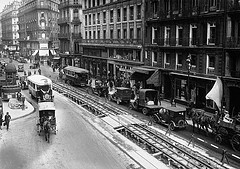
Paris 1927
Paris 1927

.

Fitz and Hem:

Presentations coming up through The Hemingway Society

For those who are members, the Hemingway Society has some wonderful Webinars coming up. Some are academic; some very timely; some just plain interesting and illuminating. Hope all are having a good summer. Best, Christine

A Publication of the Hemingway Society | July 13, 2021THE HEMINGWAY SOCIETY IS PLEASED TO BEGIN OUR2021 WEBINAR SERIESDear Hemingway Friends, The Hemingway Society’s webinar series–A Dangerous Summer–begins this week with our discussion of The Sun Also Rises on Friday and a joint session with the Fitzgerald Society on the Academic Publishing Marketplace on Wednesday!Dig deep into Hemingway’s The Sun Also Rises.  Whether you are preparing to teach the novel or just want to revisit it with fellow aficionados, this session will review the publication history, reception, and major critical approaches that have shaped the way we understand this important work. The discussion is moderated by Juliet Conway and features Susan Farrell, Jeffrey Herlihy-Mera, and KatieWarczak. This webinar is Friday, July 16 at 1pm EDT.Register for The Sun Also Rises! 
And before the first Dangerous Summer session, join us for a joint webinar with the Fitzgerald Society on the Academic Publishing Marketplace.  Fitzgerald Review managing editor Kirk Curnutt and Hemingway Review editor Suzanne del Gizzo as they explore the dos and don’ts of writing, submitting, and revising. We’ll be joined by special guests, including Lee Zimmerman, editor of Twentieth-Century Literature; Lynda Zwinger of Arizona Quarterly; Aurora Bell, acquisitions editor at the University of South Carolina Press; and James W. Long, acquisitions editor at Louisiana State University Press.The webinar is Wednesday, July 14, 2021, at 1 pm EDT. For registration, you can click to: REGISTER HERE 

And don’t forget to register for our other Dangerous Summer events!
July 23rd @ 1 pm – Hemingway’s Short StoriesModerated by Ellen Andrews KnodtPanelists: John Beall, Susan Beegel, Donald Daiker, and Ross TangedalJoin us as a small group of scholars candidly discuss some of Hemingway’s short stories. Whether you are preparing to teach Hemingway stories or just want to hear what fellow aficionados have to say about them, this discussion will focus on how we and our students read the short stories now, posing questions such as what elements of the stories interest students and what stories or aspects of Hemingway stories are most problematic now?  Register for The Short Stories!
 July 30th @ 1 pm – Hemingway and Race Moderated by Marc DudleyPanelists:  Gary Holcomb, Ian Marshall, Quentin Miller, and Peggy Wright-Cleveland How might the Black Lives Matter movement affect the way we read, teach, and write about Hemingway? Will it? If so, in what ways? Hemingway and Race is a large and complicated topic. Hemingway wrote about Native peoples and had a long relationship with the Latin world. This panel will focus primarily on Hemingway’s interactions with black people, his portrayals of black characters, and his awareness of and relationship to social movements related to race. Register for Hemingway and Race!
 August 6th @ 1 pm – Hemingway and SexModerated by Suzanne del GizzoPanelists: Carl Eby, Debra Moddelmog, Lisa TylerHow does the #MeToo movement affect the way we read, teach, and write about Hemingway? Gender and sexuality have been defining topics in Hemingway scholarship for nearly forty years now, but #MeToo adds new levels of complexity to that already rich discussion, inviting us to think about the dynamics of sex, seduction, and sexual violence in Hemingway’s work. Register for Hemingway and Sex!
the Hemingway Society | www.hemingwaysociety.org
Hemingway Society | 18 East Rosevear St, Orlando, FL 32804

Unsubscribe chris@whiteheadlegal.comUpdate Profile | Constant Contact Data NoticeSent by hemingwaysociety@aol.com